
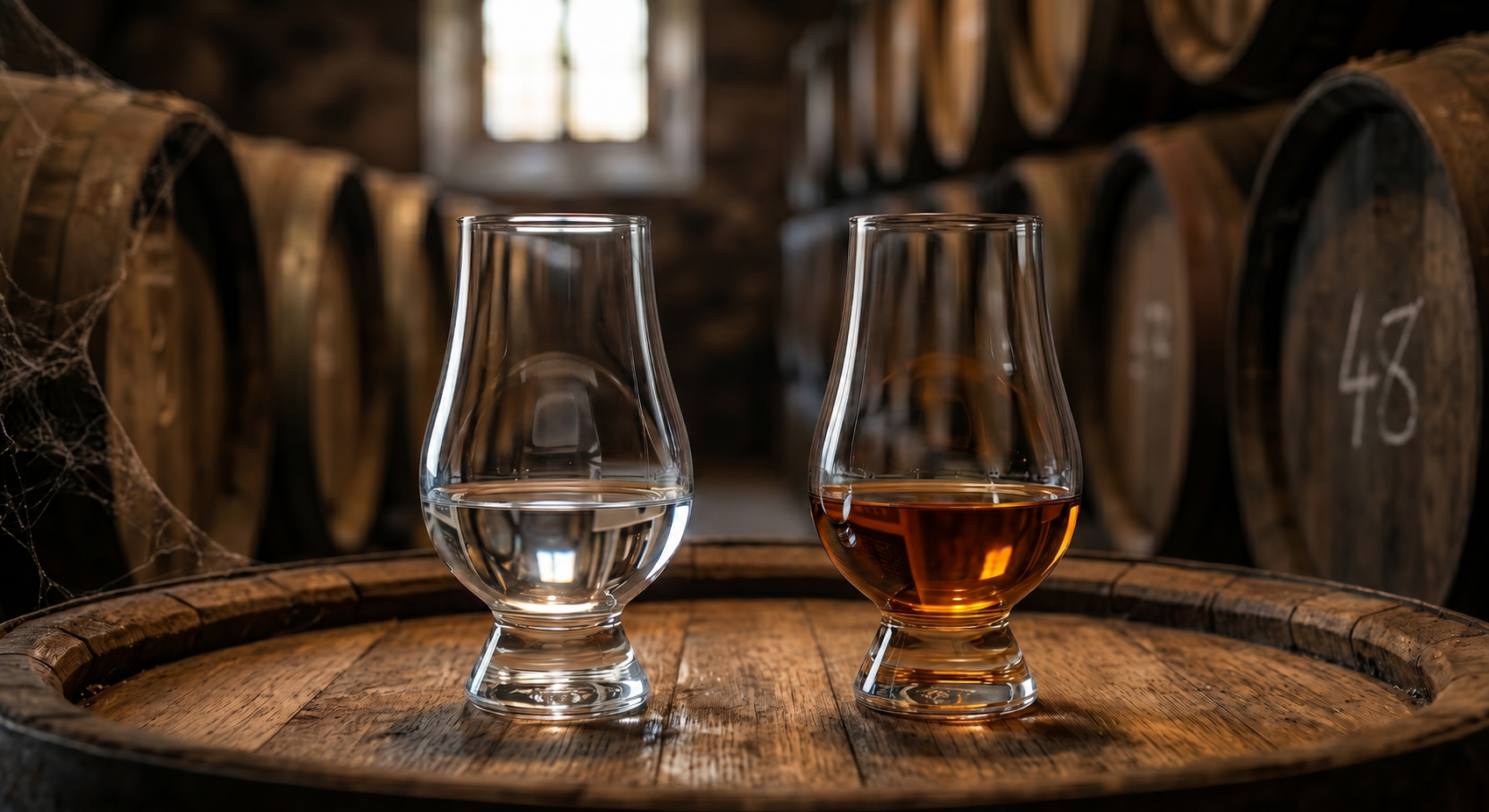
The question any serious investor should ask about a new asset class is the same one they ask about every other alternative: when the market corrects, does this go with it? For most alternatives, the honest answer is uncomfortable. Private equity correlates with domestic equity at around 0.81, per a 2024 endowment analysis published in the Journal of Asset Management. Hedge funds track equity markets nearly as closely. Art and fine wine track wealth-effect liquidity, selling down when the buyers are capital-constrained. Cask-aged assets are structurally different, and the reason is not a marketing claim. It is physical chemistry.
What "Alternative" Actually Means in 2026 (and What It Doesn't)
"Alternative" has a specific theoretical meaning: a return stream driven by fundamentals distinct from the factors that move public markets. The practical reality is messier. Most products labelled as alternatives share the same underlying demand: investor capital chasing yield. When that capital gets constrained, whether through a rate shock, a credit event, or a confidence collapse, even the most carefully branded alternatives reveal their correlation.
The assets that hold up through capital-constrained conditions share a common characteristic: their price is partly or wholly determined by something other than investor demand. Farmland earns rental yield from soil productivity regardless of what the S&P 500 is doing. Core real estate in supply-constrained cities has replacement cost floors. The value driver is physical, not financial.
Cask-aged assets have a physical driver. And it is more specific than "scarcity" or "tangibility." It is maturation. An oak cask sitting in a bonded warehouse is not a passive store of value. It is an active physical process, running continuously, that produces something the drinks economy will pay for when it is done.
Price Formation: Maturation Curves vs. Market Liquidity
A Speyside hogshead loses roughly 2% of its volume to evaporation every year (the angel's share), while the remaining spirit extracts flavour compounds from the oak: vanillin, tannins, oak lactones. The wood contributes between 30 and 50 percent of a mature spirit's flavour profile, depending on cask type, fill history, and how long the spirit has had to draw from it. This is not an abstraction. The molecular transformation is measurable, sequential, and time-gated.
What this means for price formation: a significant portion of a cask's value is driven by age itself, not by investor demand for the position. A ten-year-old Speyside hogshead has more character embedded in it than the same spirit at five years, because something physically happened to it. That transformation is independent of what equity markets did in the intervening period.
Compare this to most alternatives. A unit in a private equity fund tracks its underlying portfolio valuations, which in turn correlate with public multiples at a lag, with some smoothing, but the link is structural. A cask of whisky at year eight has no such linkage. Its maturation has been running on oak and time, not on credit conditions or multiple expansion.
One honest qualifier: demand still influences the market price you would receive for the position at any given moment. A thin secondary market in a risk-off environment will price a position lower than the underlying maturation quality would justify. The cask keeps maturing regardless. The gap between market price and physical value has gravitational pull back toward equilibrium, because the product eventually has to be worth something in the drinks economy, and that market is substantially more stable than financial markets over comparable periods.
The Category Cases: Scotch, Tequila, Fortified Wine, Rum
The maturation argument holds across categories, but the curve shapes are meaningfully different.
Scotch whisky has the most studied maturation profile of any aged spirit. The investable window runs roughly eight to twenty-five years, with the most intensive character development concentrated between years eight and fifteen, as complexity compounds and scarcity premium begins to build. Angel's share loss is modest, around 2% per year in Scottish bonded warehouses, meaning volume reduction is measured over decades rather than years.
Tequila operates on a materially tighter envelope. Highland Jalisco warehouses see angel's share losses of 8 to 12% of barrel volume per year, a figure confirmed by Tequila Authority's analysis of regional production conditions and corroborated by multiple master distillers (Patron's operations have cited rates approaching 1% per month). At that rate of volume loss and oak extraction, the flavour benefit of extended aging collapses past year five or six in most cases, tipping toward over-oaked spirit rather than developing further complexity. This is why experienced tequila investors focus on value concentrated at classification crossings (Reposado to Anejo, Anejo to Extra Anejo) and producer prestige, not on extended holding periods. The assumption that longer is better does not transfer from Scotch.
Cask-aged fortified wine sits at the opposite end of the durability spectrum. Tawny Port aged in Portuguese oak pipes matures over decades. Madeira is arguably the most resilient of any fermented product, with documented nineteenth-century bottles remaining genuinely complex and actively traded at auction. Vintage Port and aged Sherry follow their own maturation curves, with scarcity characteristics that emerge over timescales few financial instruments can approach.
Rum presents the widest dispersion of the four. Caribbean rums in tropical conditions face angel's share comparable to tequila, with rapid maturation and significant yield loss over short periods. Continental-aged rums follow something closer to the Scotch profile. The secondary market for aged rum is thinner than for any of the three categories above, which means price discovery is less reliable and the maturation argument carries more of the structural case without market corroboration.
Where the Correlation Does Show Up (and Where It Doesn't)
The claim is not that cask-aged assets are perfectly uncorrelated with financial conditions. That would be inaccurate.
Secondary market transaction volume does reflect investor demand. In risk-off environments, fractional position buyers get more selective. Sellers who need liquidity may accept prices below what the maturation trajectory would justify. The market-liquidity component of any position carries some correlation with broader financial conditions.
What does not correlate is the physical process. The maturation curve runs continuously regardless of market conditions. A cask at year eight in a market downturn is still a cask at year nine when conditions ease, with another year of character embedded. The floor of the value proposition is physical, and it does not reprice with rate hikes.
A more precise framing: cask-aged assets carry two overlapping components. A physical-maturation component that is structurally uncorrelated with financial markets. And a market-liquidity component that carries some correlation, particularly for positions held over shorter horizons where secondary-market pricing dominates. The longer the holding horizon, the more the maturation component dominates.
What This Implies for How the Position Behaves in a Portfolio
For an investor thinking about portfolio construction, the structural point is this: you are adding an asset whose primary value driver is a physical, time-gated process, not investor sentiment. That is genuinely different from most things labelled as alternatives.
What it implies practically:
- Position sizing matters more than entry timing. The maturation curve is a multi-year process. Entry point matters less here than for assets where short-term price is sentiment-driven.
- Category selection matters. Scotch in its eight-to-fifteen year intensive phase has a different exposure profile than tequila approaching Extra Anejo, which differs from a Tawny Port with decades of oak ahead of it. These are not interchangeable positions. They are distinct physical processes with distinct curve shapes and maturation envelopes.
- Liquidity horizon should be matched to the category. Shorter holding periods are more exposed to the secondary-market component. Investors who hold through maturation inflection points are accessing more of the physical-value driver and less of the sentiment-driven component.
Cask-aged assets are not a hedge against market corrections. They are a structurally distinct value driver, one that happens to produce something worth drinking at the end of it.
Start exploring
Most alternatives are labelled "uncorrelated" and deliver correlation when it matters most. Cask-aged assets are different not because of how they are structured financially, but because of what is happening inside the barrel. Oak chemistry runs on its own schedule, independent of rate decisions and risk appetite. Understanding that distinction is the first step to sizing the position correctly.
Explore current listings on app.caskcapital.io. For a walkthrough of how ownership, custody, and settlement work, see how it works.